
Chief Seattle – an indigenous tribe leader known for his wisdom – once philosophized, “Humankind has not woven the web of life. We are but one thread within it. Whatever we do to the web, we do to ourselves. All things are bound together. All things connect”.
Introduction
From this same idea of interconnectedness, scientists developed the Anti-Butterfly Effect to explain how complex bonds prevent small changes to the past from altering the present. You may have heard of the Butterfly Effect (there’s even a movie named after it) which claims that small actions can cause a ripple effect somewhere else. Recently though, this theory has been proven incorrect in a lab setting run by Los Alamos physicist Bin Yan. The new Anti-Butterfly Effect implies that reality can also right itself despite small changes because it is a system consisting of numerous parts. Think of the world like a net of some sort; just because a line is cut, the rest will not fall apart because it is all connected. This idea so similar to fate is even apparent in history. For instance, what if I told you World War II was inevitable and not purely caused by Adolf Hitler as many believe? What if multiple events caused dissatisfaction and bitterness in Germany? And what if that created a complex structure which one man could not have possibly transformed overnight? The Anti-Butterfly Effect in history is what I’ll go through today.
Context of WWII
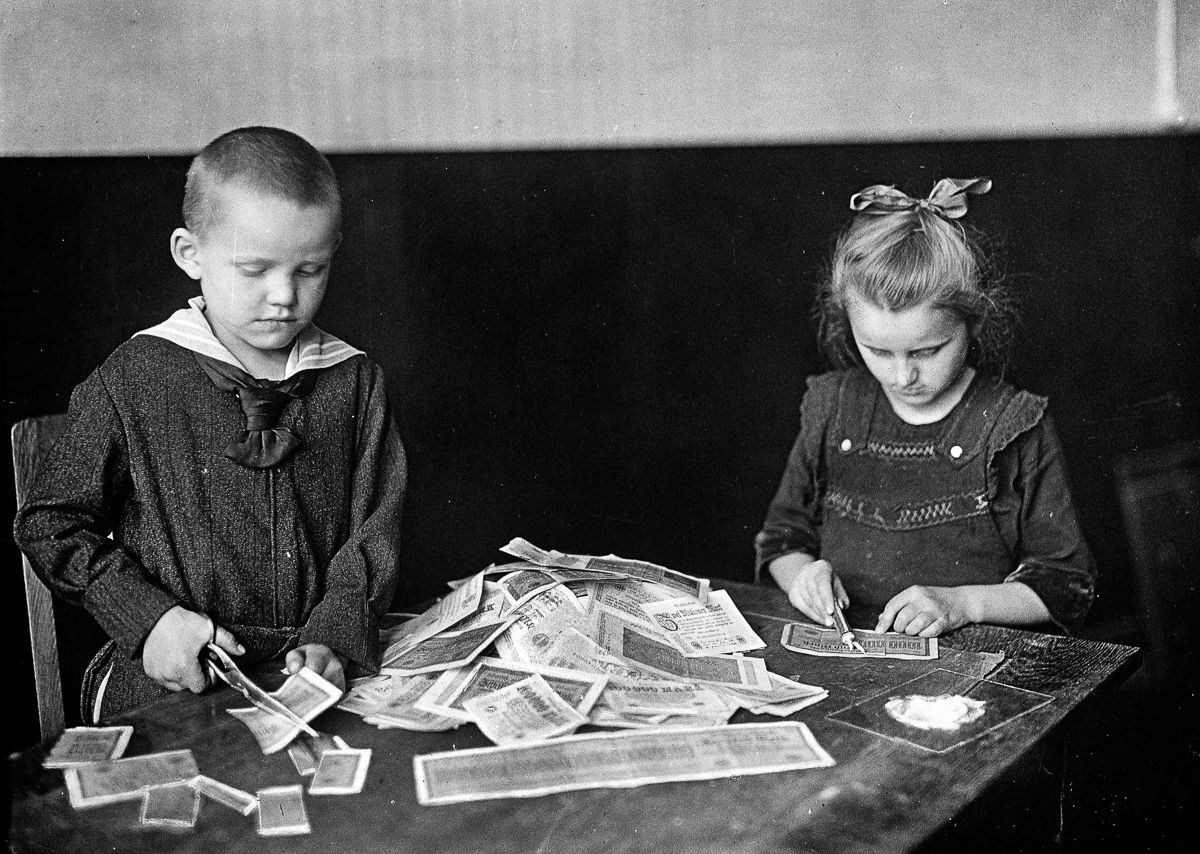
Before I get started, here is a short description of the context of World War II. A monarch seized control of Germany soon after it became an independent nation (Fun Fact: Germany is a younger nation than the USA, but their culture, language, and people are older). During World War I though, the German emperor abdicated the throne and left the government in the hands of the people. Those people were tired of monarchies and absolute leaders. Then, the Weimar Republic, a temporary democratic government was set up. The new government withdrew Germany from World War I and agreed to the punitive and unfair terms of the Treaty of Versailles (the treaty placed all the blame on Germany, forced Germany to pay billions in reparations, and significantly reduced Germany’s military), causing widespread dissent and creating the framework for the Anti-Butterfly Effect to gain a foothold. I will explain exactly how and why this happened soon, but this is what you need to know for now: while the Anti-Butterfly Effect was named to describe the way quantum particles move, it also affects the world as a whole by protecting reality and preserving the path of history with the strength of tangled connections.
The Science
To understand the Anti-Butterfly Effect’s meddling in history, you must first delve deeper into the science of it all. As a result of the interconnectedness of reality, the Anti-Butterfly Effect governs the universe by righting quantum particles changed in the past before they return to the present. A group of scientists tested the theory by damaging quantum bits, or qubits, in the past, and sending them through a circuit into the present to identify any potential changes. If you’re like me and wondering how on earth time travel exists and how no one is talking about it enough, the truth is a little less dramatic: the scientists did all of this with math and some clever physics. Yan – the main scientist – discovered the Anti-Butterfly Effect through this experiment and came to a conclusion: “As long as the circuit is complicated enough to produce significant entanglement among the qubits, the potential damage is curtailed; any information damaged in the past is recovered in the present…Yan says, “At the quantum scale, reality is self-healing. Entanglement is preserving the present, protecting it”. Going back to the net analogy, the Anti-Butterfly Effect basically makes the broken line in the net grow back and fix itself. When this phenomenon is applied to reality’s scale, the extraordinary power of entangled systems is visible through every seemingly harmless action of free will. People make decisions every single day: what to eat, what to wear, what to do, and what to say. If every small action snowballed into a huge alteration to the future, reality as we know it would collapse. Imagine if wearing a blue shirt on one day caused a tsunami in Hawaii the next week, crazy right? For the world to be able to preserve the present, the various ties connecting different humans and events is crucial; it is what allows everyday activities to occur individually without ruining the order of society. The Anti-Butterfly Effect uses the interrelation between parts of the world as a glue to protect reality from crumbling under the weight of every choice and action.

Butterflies in Germany
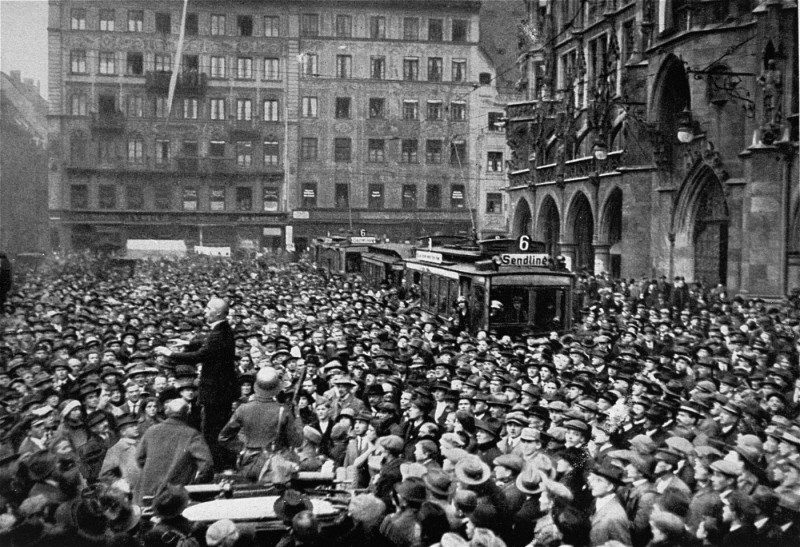
One of the best examples of the Anti-Butterfly Effect impacting the world can be found in Germany’s past. Considering the fact that Germany was a centralized, integrated country in the time between the two world wars, it is only logical to figure that Hitler would have been replaced by another nationalistic dissenter had his life’s path been altered in some way; the Anti-Butterfly Effect enables this to happen. Let’s back it up a bit; Germany unified just shortly before World War I during the Industrial Revolution because they realized that working together could bring them more profit than remaining as separate states. Germanic people had existed for a very long time and shared many traditions and legends – which made them a very tight-knit society. A common misconception is that World War II could have been prevented if Adolf Hitler had not risen to power. In fact, Hitler was originally intending to become an artist; sadly, the art institution he applied to rejected him. Soon after getting his hopes and dreams crushed, Hitler helped lead the Beer Hall Putsch – a failed attempt to overthrow the government – as one of the many young men craving justice. Afterwards, Hitler was put in jail; in confinement, he wrote Mein Kampf (infamous Nazi literature that set the standards and beliefs of the Nazi Party). Contrarily, the friction caused by the terms of the Treaty of Versailles, which only benefited the winning side of the war, and the incompetent Weimar Republic had been brewing for quite some time, and Hitler was not the only angry citizen. Looking further than the surface level reveals that “Many Germans resented the terms of the [Treaty of Versailles] and felt the Weimar government had sold them out by agreeing to such harsh conditions. In 1920, a group of German nationalists tried to overthrow the new government” (Sheposh). This discloses that there were numerous other people with belief systems akin to Hitler. The feeling of betrayal and insurrection attributable to the governments existed in almost every citizen in Germany. When systems are as intricate and connected as Germany during the interwar years, nothing can be changed in the past to alter the present; not even Hitler becoming an artist could have prevented the inevitable. If not Hitler, then any other headstrong person with excessive nationalism would have taken over and created a similar dictatorship. The world is kept on its path by the Anti-Butterfly Effect; it uses the strength of links between components to prevent history from going astray.
Why is this Important?
Although the Anti-Butterfly Effect is an idea born in a lab, it plays a huge role in protecting reality and preserving the path of history. Believing that large events all stemmed from small actions is easy, yet it overlooks the vast systems that all fused together to cause a major change. Everyone could afford to look a little further and dive a little deeper to understand the truth. For reality is an intricate web of strands bound together, and a small raindrop cannot break what is fundamentally fused. No change was caused by a single action or person; every single being needs to be taken into account to explain world-wide events. Remember, everyone has a story to tell.
Discover more from Inkspire
Subscribe to get the latest posts sent to your email.
 Inkspire