
Even in the dreary building made only to house him and his friends until they are walked to their death, Anthony Ray Hinton chose love and happiness.
Introduction
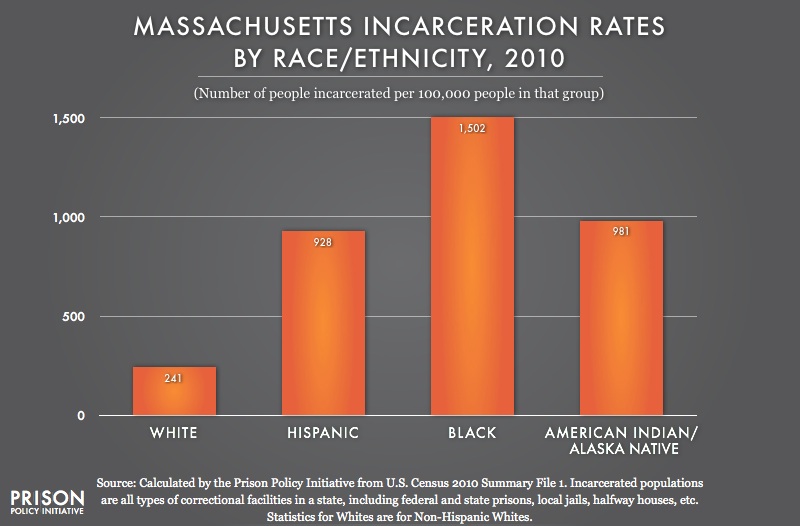
Anthony Ray Hinton is one of the many black men who grew up in a less privileged neighborhood, was caught in the wrong place at the wrong time, and was sentenced to death for it. The fact that he survived to tell the tale in a beautifully written memoir sets him apart from all of the others that did not receive that opportunity. In 1985, a man committed numerous murders in the same manner and left nearly no evidence behind; the police declared that there was a serial killer on the loose. Soon after, law enforcement showed up at Hinton’s house and arrested him for the murders. There was absolutely nothing in the case pointing towards his guilt; however, one of the officers on the case openly shared that his innocence did not matter because if it wasn’t him it was “one of his brothers”. Sadly, during this point in American history, wrongful incriminations like this one happened so often that it was almost normal. Mass incarceration – a term created specifically to describe the huge amount of jailing in America – started in the 1970s and continued to grow until the global pandemic hit. Oftentimes, politicians try to behave “hard on crime” to get elected. They partner with prisons that want to make more of a profit. Those ideas partner together and result in America having more people in the prison system than any other developed nation. During this same time of mass incarceration, Anthony Ray Hinton was put on trial. Although he had a solid alibi that put him far from the location of one of the murders (he was at work and had signed the time sheet), his race and poverty were prejudiced against in court. In fact, the lawyer who eventually got him out of the death penalty – Bryan Stevenson – famously said “capital punishment is for those without capital. To put it simply, people are only sentenced to death because they don’t have enough money to hire a better lawyer. Hinton faced these same exact issues when he was trying to prove his own innocence. The lawyer appointed to his case by the government was greedy and only after the money; he even complained about only being paid $1000 for it. The lawyer was distracted by his own disappointment in the pay that he failed to argue adequately for his client. Anthony Ray Hinton was not allowed to produce his polygraph (lie detector test) in court because it would have proved his innocence, and his lawyer did not do anything about the injustice. Additionally, when the prosecutor (lawyer claiming that Ray was guilty) announced that the gun in Hinton’s house was the murder weapon. In all truthfulness, that gun had not been fired in years. Ray and his lawyer tried to hire a ballistic expert to analyze the gun, but he could only offer a couple hundred dollars which only got him a mediocre weapon specialist. The specialist was easily shut down in court and even ridiculed in the process despite the fact that all of his findings were true. In the end, Anthony Ray Hinton was sentenced to death row for no reason other than pure bad luck.
And the Best Supporting Character Award Goes to…
Buhlar:
If all the reasons why good things happened to Anthony Ray Hinton were summed up in three words, they would be Buhlar, Lester, and Bryan. Buhlar was everything a good mother should be, and she raised him to love anyone and everyone. Even when she found out that Hinton had come home with a stolen car, she took him to the authorities, made him confess to his crimes, and continued supporting him afterwards. Anthony Hinton spent twenty-eight years on the death row, and she was a guiding light throughout his experience there. She visited him as often as she could, and when she wasn’t there Ray lived by her teachings. Buhlar passed away in 2002 of cancer; she never had the chance to see her son be a free man again. Upon knowing that he lost his mother, Hinton was devastated and even considered killing himself like so many others before him on death row, but he heard his mother’s voice in a dream which changed everything. Like an angel, she instructed him not to let the devil win and to continue fighting for his freedom for as long as he could. These words took Hinton out of his downward spiral and made him work even harder.
Lester:
Another person who made immense sacrifices just to help Anthony Ray Hinton is Lester. Ray grew up with Lester, and they became inseparable somewhere along the way. It was with Lester that Ray would walk home from school every evening. One particular night, as they were walking back home, like clockwork they shuffled through the shadows and hid behind a bush the second a headlight was visible through the horizons. This behavior was not because the duo had done anything wrong; it was simply because they were afraid of getting lynched (publically murdered for their race). That same night, while hiding behind a bush, Ray realized the reality of his own situation – cowering and hiding from hateful people. Hinton and Lester made a pact to someday walk bravely in the streets at night, and that is exactly what they will do. When Ray was imprisoned, Lester was the one person who never missed a single visit nor doubted his innocence, and outside the jail Lester fought vigorously to help Ray.
Bryan:
Lastly, this list could not be complete without mentioning Bryan Stevenson – the lawyer who helped Ray free of charge. Throughout his memoir, Ray calls Bryan “God’s best lawyer”, and the name was absolutely deserved. Bryan took up the case knowing it would be a difficult battle, and he soon became one of Ray’s closest friends. Anyone can tell that Ray Hinton’s story would’ve gone completely differently if Bryan Stevenson hadn’t helped him out of the good in his heart.
You’re More Than the Worst Thing You’ve Done
This particular book, in addition to representing an important piece of American history, teaches the valuable lesson that everyone is worth more than the worst thing they have done. A murderer is always named after one of their actions despite their life having far more depth. This is true for the opposite side of the spectrum of good and bad as well; a Nobel prize winner will forever be acknowledged by one award. The memoir dives deep into the reasoning behind why this is not the way the world should view human beings. Every single person is a mosaic of all the things they’ve done and seen; only viewing them through one specific lens would be foolish. For example, on death row, Ray meets Henry Hays – a man infamous for leading the lynching of a black man. Henry’s father was also a passionate leader of the Ku Klux Klan (a violent white-supremacist group). Despite his troubled background, Hays grew to be close friends with Hinton and forsook all of his father’s teachings. Ray Hinton knew that some people are raised to hate instead of love, and he was incredibly accepting of Henry even when some others weren’t. Henry Hays was executed while Ray was still on the death row, and Ray made sure that Hays was loved and supported till the second his heart stopped by screaming and rattling the bars of his cage. Henry Hays acted in villainous ways at parts of his life, but he was willing to admit that he was wrong, change his ways, and be more accepting of different people. All of this goes to say that the worst thing Henry did – participate in a boy’s lynching – does not define who he is as a person because of the immense character development he went through.
Hope in Dark Places
The average man on death row contemplates his life and tries not to get killed any time soon. Anthony Ray Hinton instead started a book club. Their little organization would meet every once in a while to talk about the books they read and the topics in it. America’s entire justice system and government stood against him, yet Ray chose to make other people’s lives better and support them by bringing some sense of normalcy into their lives. This all happened because Ray Hinton had enough hope to fill his heart and overflow into others. Hope was another ideal engraved in his mind by his mother, and it served him well in the worst of times. Rather than sit idly and accept his fate, Ray ceaselessly told himself that he would make it out of death row and live to tell the tale. When officers mistreated him and his loved ones, he held his head high. When judges acted blind to the blatant evidence showing his innocence, he kept speaking his truth. Lastly, when he saw his own friends being walked to their death, he screamed and shouted to make them feel seen. It was this same hope that got him off death row after years and years of absolutely no signs that he would ever be free again.
Conclusion
In conclusion, “The Sun Does Shine” is a touching story of hope and friendship in the darkest of places. I would rate it a 9/10 because it genuinely changes the way the reader views the world. The characters are flawed but lovable, and their relationships are enviable; if everyone had a best friend like Lester, the population as a whole would be much happier and better off. The author also subtly urges the book’s audience to speak up about issues regarding the death penalty throughout the plot in a way that makes it impossible not to. The “Sun Does Shine” is definitely a book that you’ll read and want to recommend to every single reader you know.
Discover more from Inkspire
Subscribe to get the latest posts sent to your email.
 Inkspire