
Jane Eyre is an outstanding classic taught in high schools across America, and yet it somehow gives too little and too much at the same time.
Here’s a Little Context
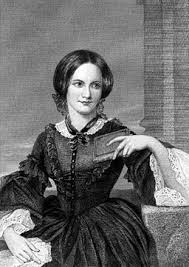
Charlotte Bronte, born April 21, 1816, in Yorkshire, England, wrote Jane Eyre including several pieces of her own life in the story.
Charlotte’s father was a clergyman – meaning he couldn’t dedicate enough time to raising his own children – and her mother died when she was five. Charlotte and her siblings are sent to Cowan Bridge (a boarding school) with horrible food, freezing halls, and strict rules. Similarly, Jane Eyre in the novel is also sent to a boarding school with bad food, cold rooms, and strict rules. Charlotte’s two eldest sisters died of tuberculosis at the school due to mistreatment; Jane’s best friend died at the school of disease also. The Bronte sisters – including Charlotte – tried to open their own school for young girls. However, their plan did not succeed, so they decided to write for a living. Each of them had their own pseudonym under which they published. Charlotte became Currer, Emily became Ellis, and Anne became Acton. (They all used the last name Bell). They knew that many publishers and even readers would not take female authors seriously, which led to their decision to adopt fake names. All the sisters wrote novels which have now become classics of English literature.
Gothic Elements
Jane Eyre is a gothic novel meaning it includes supernatural and suspenseful elements. Bronte was the first to write a gothic novel in first-person, so the reader gets to experience exactly what the protagonist does. Do not expect much from the main character Jane Eyre because while there are many pages outlining and describing her strong emotions, Jane Eyre does not act on many of them. Meaning the reader gets to listen to Jane go on and on about how certain situations frustrate her to the point where the reader begins to empathize and feel upset as well, but due to social constraints at the time Jane Eyre cannot speak up much. While this novel is a powerful social commentary on the position of women in society in the 19th century, reading it in modern times can leave you asking for more from the main character. Back to the gothic elements though, Jane Eyre includes the following: the red-room where Jane’s uncle died, a mansion with odd noises like laughter coming from the attic, and the appearance of omens through nightmares. While Jane Eyre is not exactly a horror novel, there are plenty of mysterious occurrences that build suspense.
Spoilers Ahead…
Jane Eyre is also a bildungsroman (it’s pronounced exactly how it’s spelt, I promise), which basically means it’s a coming of age story. These types of novels include the main character going through significant changes and learning to perceive the world in a new manner. The reader follows her life from the age of 8 until she is a middle-aged married woman with children. The entire time, Jane has this burning desire to be independent – which again was very difficult for women in her time. Jane is the epitome of middle class because she is not destitute, but she also is not confined to the walls of a mansion. She makes a living by becoming the private tutor of a young girl named Adele. That young girl lives under the care of a man named Rochester. (This all has a point; I assure you). Jane Eyre falls in love with the much older Rochester. Charlotte Bronte spins the story to where the main conflict becomes Jane trying to achieve the independence she has wanted for so long while being in love. Jane and Rochester go all the way to the wedding altar until (shocking everyone) someone reveals that Rochester is already married. Turns out Rochester was forced to marry a woman he had never met because his family wanted the money. That woman – Bertha Mason – turned out to be insane, and Rochester thought it would be a good idea to lock Bertha up in the attic (which explains the odd noises) and try to marry Jane. Rochester tries to defend himself by saying that he deserves to be with someone who he loves and can hold an intellectual conversation with him. Honestly, Rochester seems excessively conceited and arrogant at this point. Jane Eyre finally gives in to her passions and frustrations and runs far away – this entire moment is very satisfying to the reader who has been waiting for Jane to stand up for herself. Jane gets a job in another town as a teacher and creates a new life for herself. Who in the 19th century wants to read about a woman creating a life for herself without a man though? Apparently no one because (big spoiler ahead) Bertha Mason dies and Rochester and Jane get married. Jane Eyre convinces herself that she can be independent while serving as Rochester’s wife because the accident that ended with Bertha’s death also blinded Rochester and left him with one less hand – meaning he is now less arrogant and more dependent on Jane.
Final Rating
I’d give Jane Eyre a solid 7/10 because the social commentary on class systems and the role of women is powerful. Although, every reader rooting for Jane Eyre to take action and stand up for herself is sorely disappointed with the end. All the loose ends are tied up, however, and there is a happy ending for everyone (except Bertha Mason, I suppose). I’d like to think that if Charlotte Bronte lived today, Rochester would’ve been punished for his lies and actions, and Jane Eyre would continue her happy, independent life without being burdened by him.
Discover more from Inkspire
Subscribe to get the latest posts sent to your email.
 Inkspire