
Here’s a riddle for you: I am claimed by numerous nations in Asia, yet I reside in the British royal treasury; I have a history of toppling empires, yet there was a time when every ruler wanted me; I am worth up to $400 million, yet my historic value is far greater; what am I?
If you haven’t guessed already from the title, it’s the Kohinoor diamond.
Mughal Origins
Back when India was the entire world’s only known source of diamonds and Indian nobles were adorned head to toe in jewels and precious metals, the Mughals invaded and established an empire. This dynasty is where the Kohinoor diamond makes its first appearance in historical records, (although it should be noted that the gem was said to be revered by the gods in hindu texts). Shah Jahan – the Mughal leader of the time – sanctioned the creation of a glorious peacock throne worth roughly 4 times as much as the Taj Mahal. The Kohinoor was placed at the top of the throne in the head of a glittering peacock after 7 years of construction. The diamond remained lodged in the throne until the jealousy and greed of another Asian power led to the fall of the Mughal Empire.

Plundered by the Persians
Just as one empire fell, another came to take its place. Nader Shah, the ruler of the Persian Empire, invaded Delhi in 1739 and left with 700 elephants, 4000 camels, and 12000 horses carrying gold and gems. Along with his enormous loot, Nader stole the Kohinoor and wore it on an armband. For 70 years, the Kohinoor diamond was passed down through the ownership of countless kings and queens. This entire time period was filled with more bloodshed than can be imagined in the area that is now Afghanistan.

Symbol of Power
After an age of battles, the Kohinoor left Afghanistan and returned to India. In India, the diamond was bestowed upon Ranjit Singh. It was at this point in time in 1813 that the Kohinoor diamond became more than just a precious gemstone; it was the greatest symbol of power one could obtain. Ranjit Singh reconquered Indian lands occupied by the Afghan dynasty. To him, gaining possession of the Kohinoor was the precursor for imminent success. The diamond carried more worth in prestige and good luck than it did monetarily. This belief in the Kohinoor’s power brought it into the sight of yet another empire.
Meanwhile in Britain…
While Asia was plagued with war, bloodshed, and chaos, the British East India Company strengthened their grip on their territories. Additionally, Ranjit Singh’s glorification of the diamond drew the British monarch’s attention. The British began to refer to the Kohinoor as the “jewel of India”. Because they already held imperial power over India, owning the Kohinoor diamond was the cherry on top of the cake that they desired deeply. All of Britain was overjoyed when news of Ranjit Singh’s death reached them; they believed this was their time to snatch the diamond straight out of India. Unfortunately for them, history forced them to wait.
The Boy King
Ranjit Singh’s death led to chaos and violence for the Punjabi throne. The only viable heir left was Duleep Singh: a young boy. At last, Britain found their perfect moment to claim the Kohinoor diamond as theirs. The British forced Duleep – 10 years old at this time – to amend the Treaty of Lahore. This amendment made sure that the Kohinoor and rights to govern India belonged solely to the British. Again, an empire fell and another rose as the diamond was passed around.
Not Shiny Enough
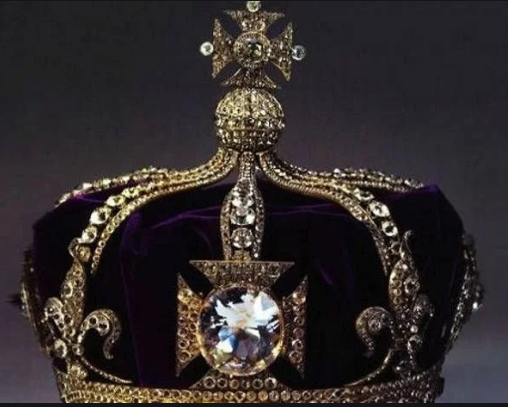
History was rewritten then to claim that the Kohinoor diamond was a gift to Queen Victoria from her loving subjects in India. The queen went on to make a grand display of the diamond only to have the British people be blind to its worth; to them, it appeared to be merely a large chunk of glass. Queen Victoria’s husband had the gemstone recut (which reduced it to half its original size) to have it reflect light better.
Gift and/or Curse
A great many empires were torn down and raised as the Kohinoor diamond was passed between the hands of rulers. While some believe that the stone is cursed because of its bloody and brutal history, today the Kohinoor diamond is kept in the British Royal Treasury with a plaque proclaiming it as a gracious gift. The only thing that everyone can agree on is the huge monetary and even larger historical value of the diamond.
Why is this Important?
Many are now asking for the Kohinoor to be returned to their rightful owners. The only issue is that all of the empires that owned the diamond have now fallen and some of the lands the gem passed through were not even fully formed nations. This is the issue that troubles most treasures stolen during colonial and imperial times. All that can be done now is to ask for the true history of all of these precious items to be told and heard. Remember, everything has a story to tell.
Discover more from Inkspire
Subscribe to get the latest posts sent to your email.
 Inkspire
Amazing! A true writer since when I was born, but that’s another story(A.K.A I’m pretty old)
LikeLike