
Thomas Hobbes and John Locke are two of history’s most iconic philosophers, and they’re often compared to one another. Hobbes wrote the Leviathan and basically claimed that humans are inherently evil in their “nasty, brutish, and short” lives. Locke was the opposite and thought humans were naturally good beings that deserved to have their natural rights (life, land, and liberty) protected. Why is it that two men in the same country and opportunities but born a generation apart began to view people and governments so differently? It all comes down to the historical events they lived through.
Introduction
From the year 1603 to 1689, England went through four kings, a dictator, and a civil war. The British Parliament and the monarchs each fought for power, and it was those battles within the government that created all of the chaos. In the end though, England had done something no other nation could’ve ever dreamed of, so let’s get right into it.
King Who Names Everything After Himself
The first monarch in this time was James I. He drove colonization forward and funded numerous expeditions. For the Americans, Jamestown (the first colony in America) should sound familiar, and yes, he definitely named it after himself like any good, self-absorbed king would. James I was also what historians call a “divine right monarch” meaning he claimed that God himself gave him the right to rule England. To strengthen his control over the nation’s religion, he ordered and supervised a translation of the bible that would forever be known as the King James Bible. James I clearly loved naming things after himself. Britain to this day uses this same bible made centuries ago. All of the challenges James I faced during his rule are attributed to either Puritanism or Parliament. These were the three main topics causing tension in England: taxing authority, state religion, sovereignty (political control). Let’s break it down now. The monarch wanted to tax whenever he wanted to while Parliament wanted to regulate taxes systematically. The next problem connects way back to a law Henry VIII issued in 1534. King Henry broke England off from the Catholic Church and created the Anglican Church for all of England to follow. Funny enough, the new Anglican Church was awfully similar to the Catholic Church they had just gotten rid of. Back to the time of King James I, Parliament was almost entirely full of Puritans (people who wanted to reform the Anglican church and make it less Catholic) while James I was barely trying to hide the fact that he was Catholic. Lastly, Parliament wanted more political power, which makes sense because they actually represented the needs of the people, but James I was not going to have anyone take away his authority. Those three complications will continue to plague England until one event changes everything. While all of these issues were boiling and mixing into a dangerous stew, Guy Fawkes (yes, his first name is Guy) planned to blow up Parliament building when the king and the entire Parliament was meeting. His plan never worked however, but Britain celebrates the anniversary of his mass assassination attempt every year on Guy Fawkes Day. Now that you’ve met the first king during this time, it’s time to move on to the next one.
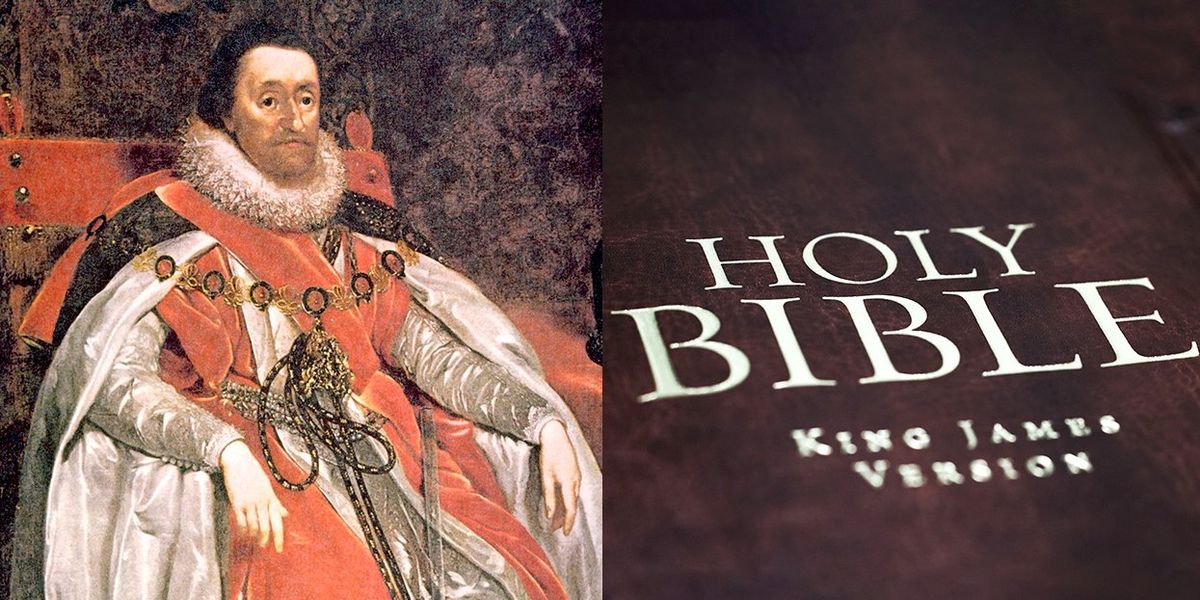
The King Who Emptied the Royal Treasury
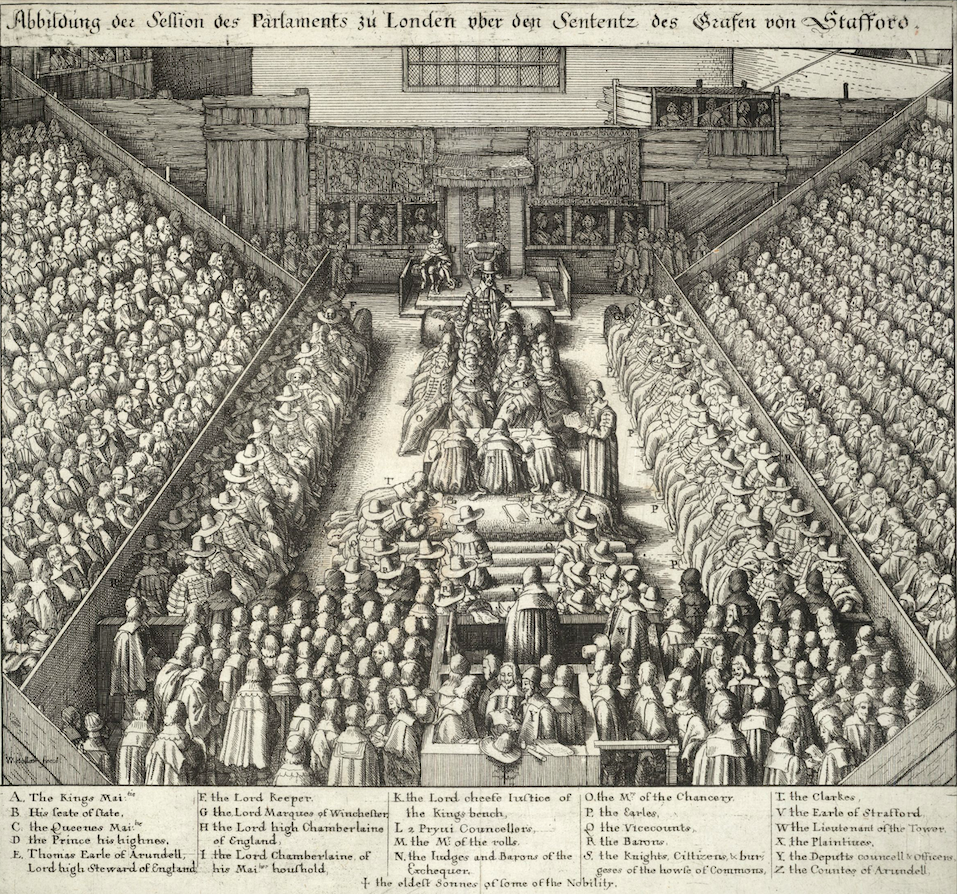
If you thought James I was problematic, just wait till you hear about what Charles I did. First of all, he married a French Catholic Princess as a slap in the face to the Puritan dominated Parliament. He also excessively taxed the people of England to fund his extremely luxurious lifestyle without once even considering what the Parliament thought. In 1628, Parliament was finally completely fed up with Charles I and passed the Petition of Right. The Petition of Right gave the Parliament all taxing power. Charles I was obviously not happy with this; in a fit of anger, he dissolved all of Parliament. The king was having the time of his life from 1629-1640 in the “Era of Personal Rule”. Somehow, he managed to empty the entire royal treasury in those eleven years, and he continued to tax recklessly to try and make up for it. King Charles I was rapidly losing favor among the people – turns out when you tax people to pay for parties and huge boats, they get pretty angry. To try and win back some sort of support, the king calls Parliament to meet again in 1940. What do you think he wanted them to meet for? If you guessed to approve more taxes, you’re right! There was a rebellion happening in Scotland, and he needed money to shut it down before it worsened. Parliament obviously refused, but Charles I – as absolutist as always – taxed England anyways. The Parliament jumped at the opportunity to end the “Era of Personal Rule” and created the Grand Remonstrance. It was basically a list of all their complaints for Charles I. The king was not about to have anyone talk ill of him, so he sent troops to arrest all of the leaders of Parliament. Some of those leaders were Puritans which made all of the Puritans of England furious. The tensions reached their highest point, and set off a war.
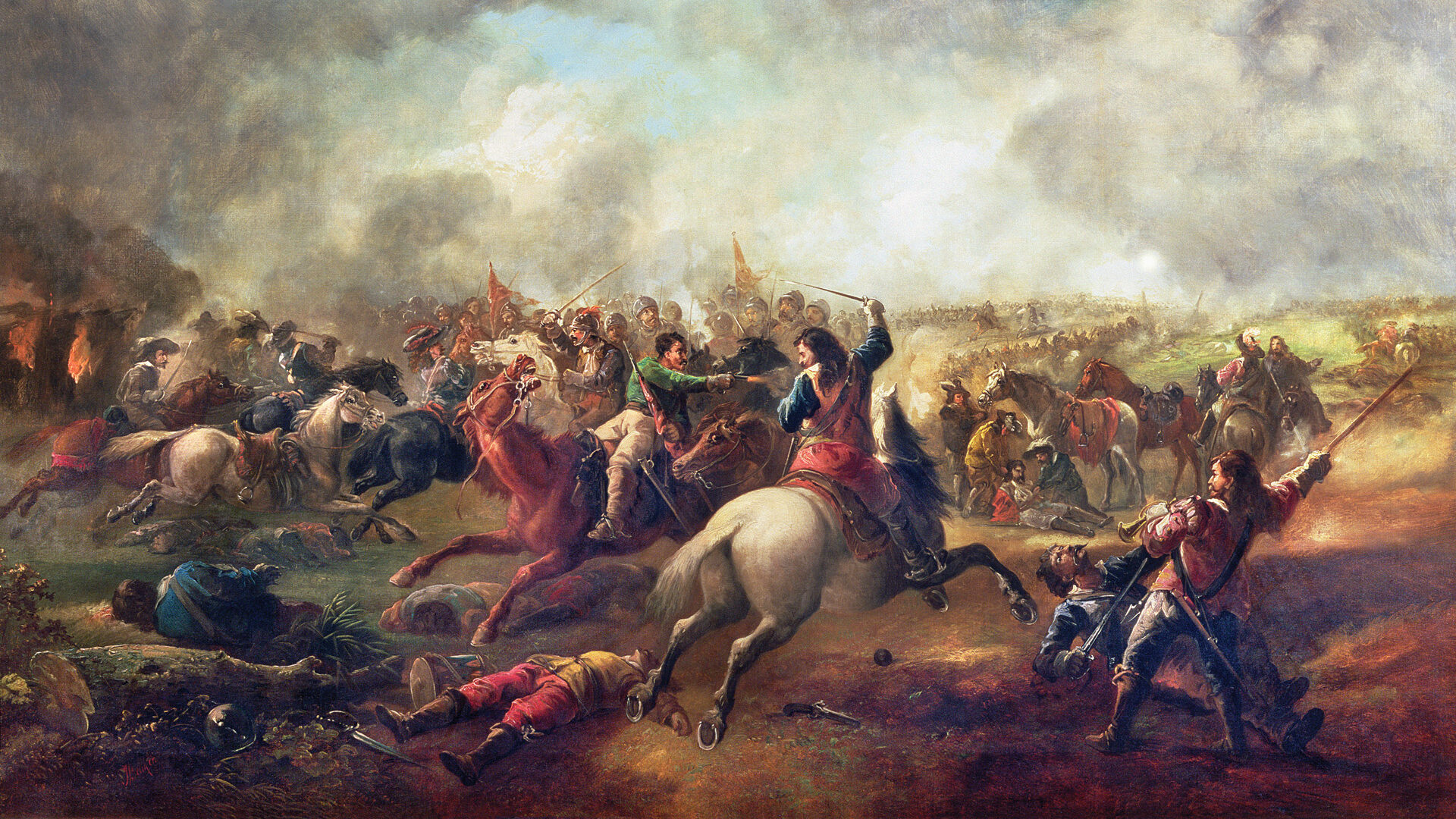
English Civil War: Cavaliers vs. Roundheads
From 1642 to 1651, England was plagued by a civil war. On one side, there were the Roundheads in the New Model Army; Oliver Cromwell led this army full of Puritans in support of the Parliament. On the other side, there were the Cavaliers who supported the monarchy. The English Civil War was dominated by sieges and small fights; in fact, there were only four major battles in this entire war. Initially, the Roundheads suffered huge losses; as a result, they were forced to ask the Scottish (who were already upset with the king) for help. The Scottish support turned the tides for the Roundheads, and the Cavaliers began to lose battles. The Cavaliers attempted to retaliate by asking for Ireland’s support (because they were heavily Catholic like the king), but they still couldn’t match the New Model Army’s strength. Two years before the war completely died out, the Roundheads captured and beheaded Charles I. Killing a monarch would soon come to be known as regicide, and it is always followed by a period of immense political instability as we’ll see next. Also, this is the time period when Thomas Hobbes was alive and writing; his surroundings most likely turned him into the pessimist he became.
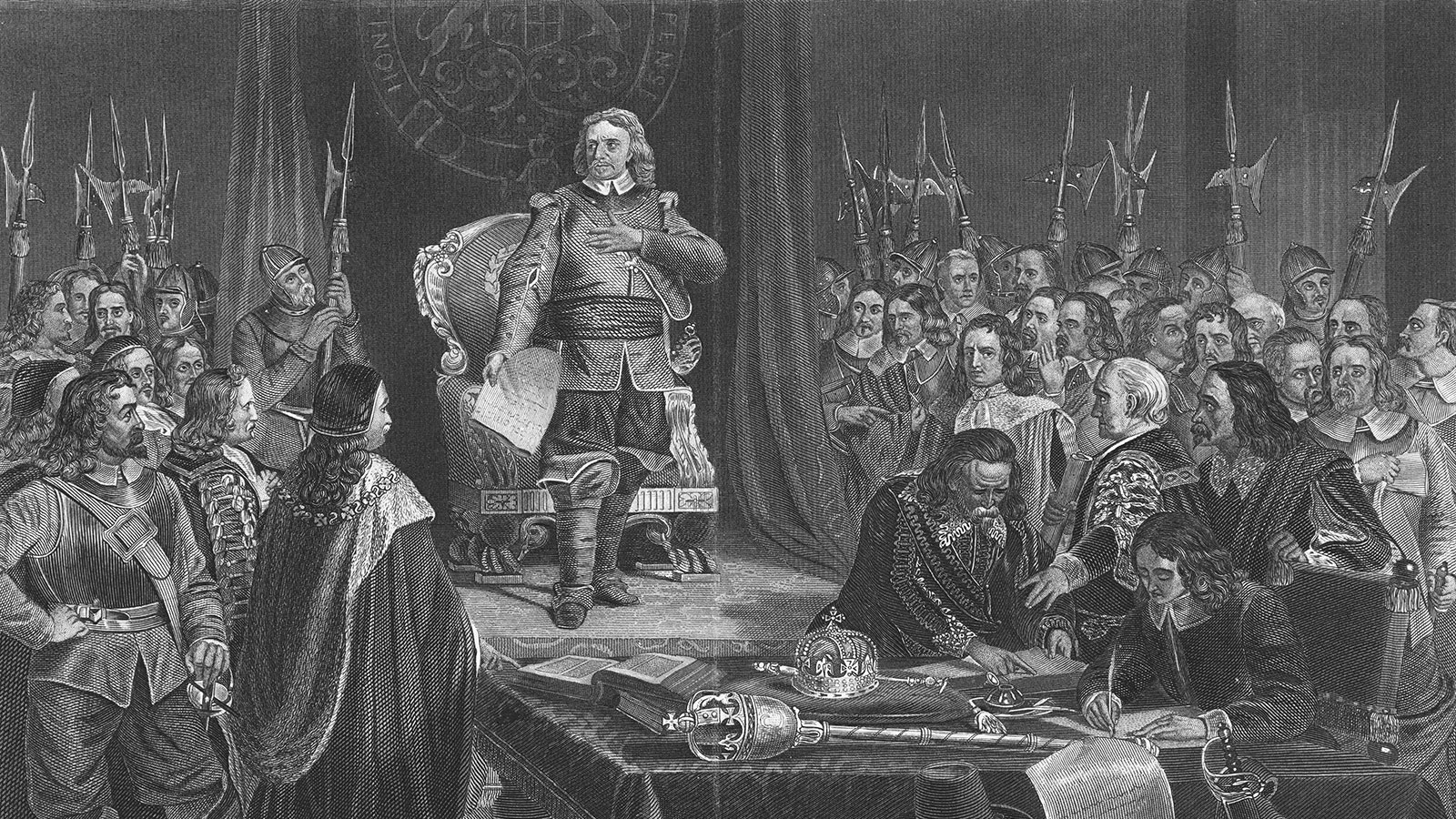
The Grinch or a Puritanical Dictator?
Remember when I mentioned a man named Oliver Cromwell who led the New Model Army? He went on to become a dictator. The next nine years (1651 to 1660) are known as the Era of Cromwell. Cromwell imposed heavy taxes during this time, which was ironically enough what the Parliament wanted to stop. His hatred for Catholicism led him to persecuting Catholics in England and only tolerating Puritans. Puritanism is known for its emphasis on hard work and minimalism; Puritans are also against holidays. Cromwell even cancels Christmas because he thought it was too in line with the Catholics’ lifestyle. If you didn’t hate him already, I’m sure you hate him now. I mean who doesn’t enjoy a couple days off for Christmas? After his death in 1658, his son led the nation for a short amount of time, but he didn’t have enough of the dictator-like personality to survive in that position. Turns out even the Parliament – although they were heavily Puritan – thought Cromwell took things too far, and they took advantage of Cromwell’s son’s weaknesses to end the Era of Cromwell.
Party Boy King
Parliament was so sick of Cromwell that they brought back the monarchy in something called the Stuart Restoration in 1660. The kings all came from the Stuart family line, and it’s called a restoration because the old form of government was put back in place. Parliament found Charles II (the eldest surviving son of Charles I) who had been hiding in Holland from the civil war and asked him if he wanted to be king. There’s really only one answer when someone asks you if you want to be king of a country; Charles II knew that and said yes. He’s known as the “merry monarch” and the “party boy king” because he was truly only trying to enjoy his life. He might’ve been left off the hook a little too much because he ended up having fourteen illegitimate children. Despite acting like a reckless teenager most of the time, he played nice with the Parliament, so they were happy with him. In fact, Parliament was commending themselves on making such a good decision until Charles II married Catholic royalty and converted to Catholicism on his deathbed, but now that he’s dead, Parliament can pick a better king right? Sadly, history says no.

The Last Absolutist
Up next on the list of Stuart kings, we have the last absolutist monarch in England: James II (wow, England really must not have any names other than James or Charles). King James II was probably the biggest hater of Parliament at that time; his favorite hobby was antagonizing them. For example, he converted to Catholicism with his second marriage and began raising a Catholic heir who would most likely become the next monarch. This probably wasn’t the smartest thing for him to do because Parliament had dealt with a lot of annoying monarchs, and they had experience getting rid of the ones they don’t like. That was exactly what Parliament did once again, but with a much better replacement this time.

The Glorious Revolution
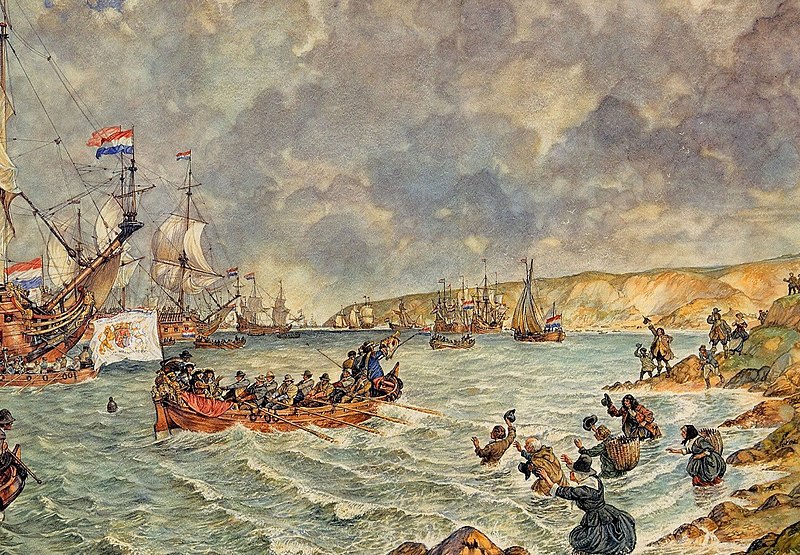
The English Parliament sent a carefully planned letter to William of Orange and his wife, Mary, asking them to invade England and rule instead of James II. William and Mary were leaders of an area in the Netherlands. William didn’t even know how to speak English fluently, but Parliament thought that a Dutch-speaking monarch would be better than a Catholic one. Parliament also forced them to sign a contract upon arrival in England, and James II was chased out permanently. This contract issued the English Bill of Rights which gave Parliament all political power and the Toleration Act which required all monarchs to follow the Anglican Church but gave Catholics toleration. Both of these resulted in a constitutional/limited monarchy – a monarchy limited by law. This entire historical event is known as the Glorious Revolution because it was the only non-violent revolution in its time. John Locke lived through this transformative event which explains why he believed in good governments who protected the rights of their people.
Conclusion
England became the most powerful country in the world soon after this. But why? And how? No nation can grow its economy or culture if it is not politically stable. The Glorious Revolution brought England the stability it needed to focus on things like trade, colonization, art, and science. This also explains how England controlled so much of the world in the colonial period and how it industrialized before any other country. It is important to remember, especially in times of political tensions like America’s 2024 election, that a country can only grow and prosper if its government is completely stable enough to urge developments forward. The moral of this story is as follows: political stability leads to growth. Remember, everything has a story to tell.
Discover more from Inkspire
Subscribe to get the latest posts sent to your email.


Awesome story, but who is “William of Orange”?
LikeLike